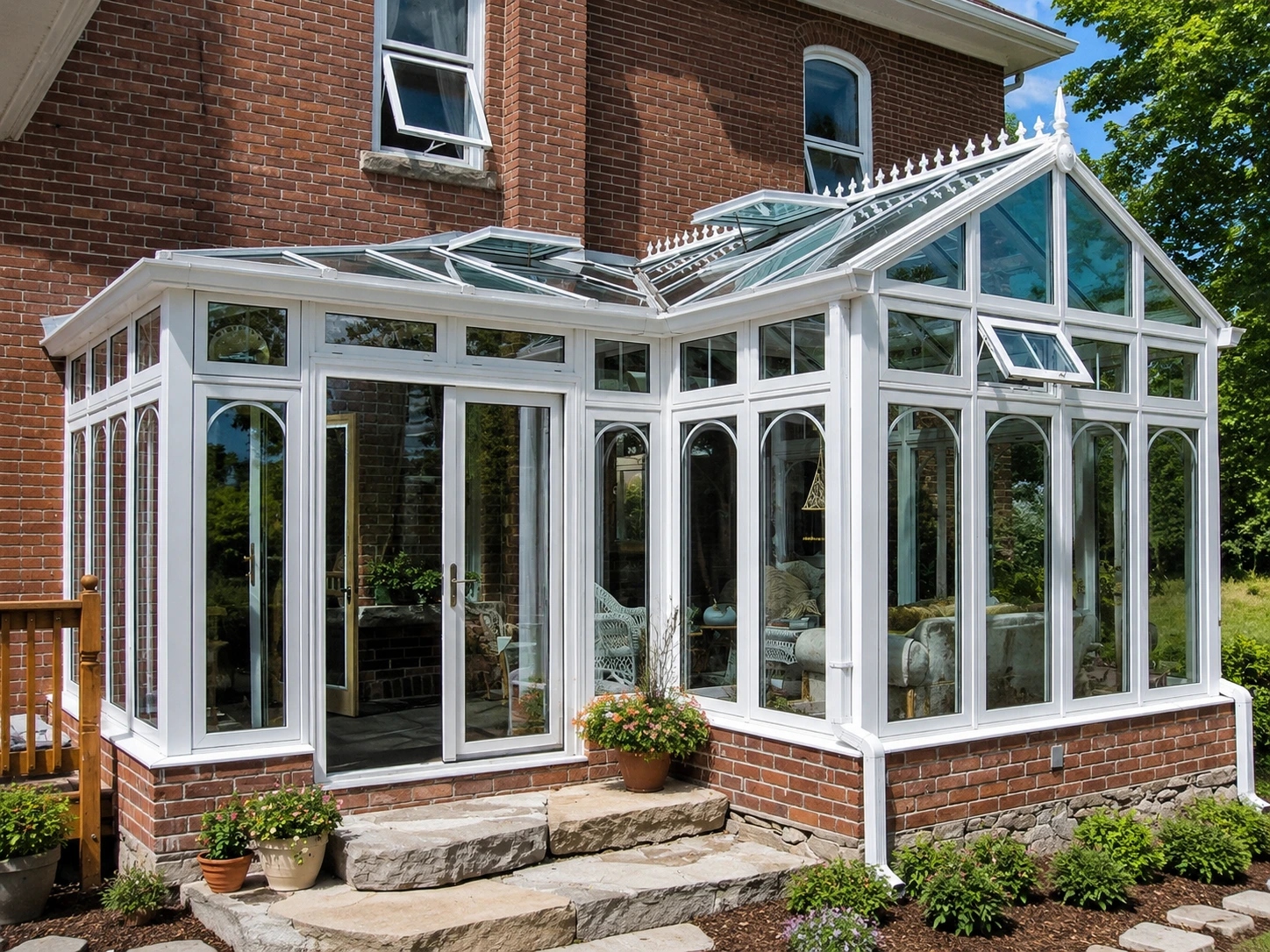
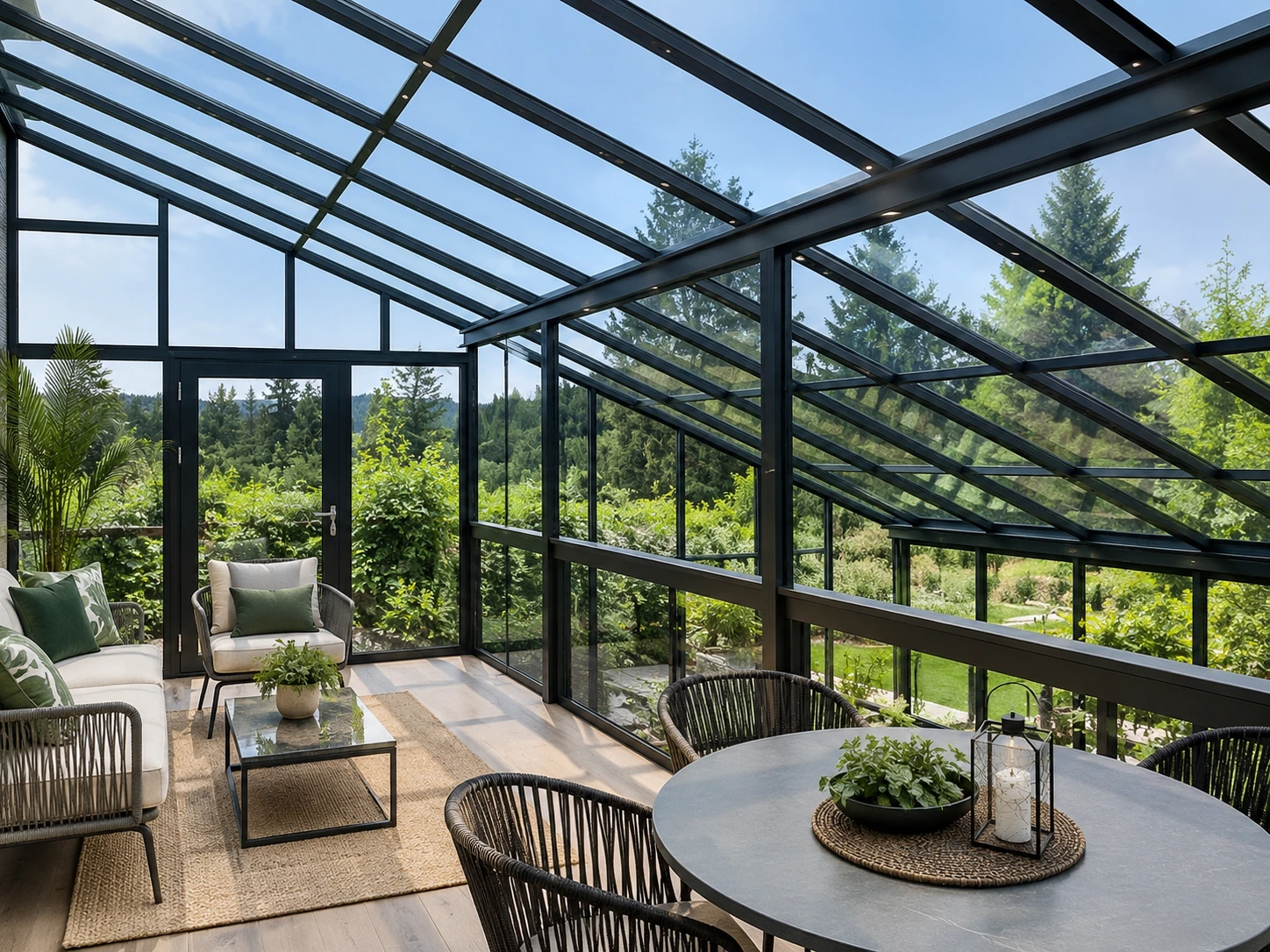
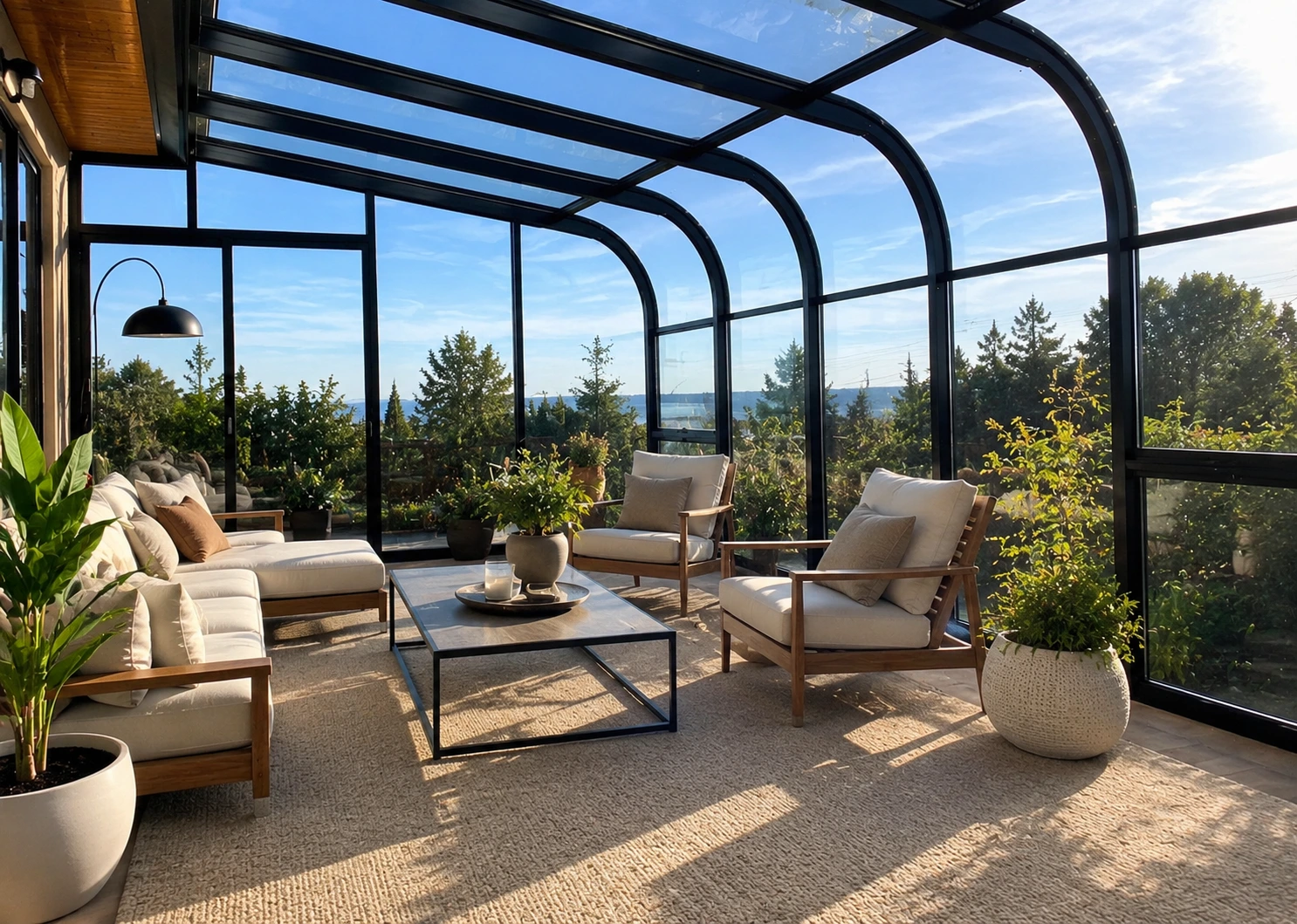
If you are comparing a 3-season vs 4-season sunroom, the real question is not just how many months you want to use it. The real question is how finished, insulated, weather-tight, and structurally integrated the room needs to be. That difference affects cost, permits, foundation requirements, window choices, roof tie-ins, and how comfortable the room will feel when the weather turns cold or wet.
Solariums Direct helps Washington and Oregon homeowners compare kit options before buying. Some homes are a good fit for a simpler seasonal enclosure. Others need a more complete custom sunroom plan because of how the space will be used and how the existing home is configured.
If you are still deciding which category fits, start with our comparison of a patio cover vs screen room vs sunroom. If the room would sit on an existing deck, read the structural checks in can you build a sunroom on an existing deck before choosing a kit type.
What is a 3-season sunroom?
A 3-season sunroom is usually designed for comfortable use during milder parts of the year. It may protect against rain, wind, bugs, and leaves, but it is not typically planned to perform like a fully conditioned room in the middle of winter. Depending on the design, it may use lighter window systems, less insulation, and a simpler enclosure strategy than a 4-season room.
This can be a smart choice if you want a brighter sitting area, a protected place for morning coffee, or a more comfortable transition between indoors and outdoors. It can also make sense when the existing patio or deck is not ready for the weight, complexity, or budget of a more finished addition.
What is a 4-season sunroom?
A 4-season sunroom is planned for more year-round use. That does not mean every project is identical, but the expectations are higher. The room usually needs better windows, stronger attention to insulation, moisture control, roof integration, air movement, and the way the new space connects to the existing structure.
In the Northwest, the details matter because rain and drainage problems can turn a good idea into a long-term maintenance issue. A 4-season sunroom should be planned with the roofline, flashing, slab or foundation, and water movement in mind before anyone gets too attached to a drawing or product package.
How homeowners actually phrase the question: is a 4-season sunroom worth it in the Northwest?
A 4-season sunroom can be worth it when the goal is a true extension of the home rather than a protected patio. If you want to use the room during colder months, keep furniture in it year-round, reduce drafts, and make it feel connected to the interior, the added planning can be justified.
It may not be worth it if you mostly want rain coverage for grilling, a bug-free summer sitting area, or a lower-cost way to improve an existing patio. In that case, a patio cover, screen room, or patio enclosure may be a better fit.
Step-by-step: how to decide before starting a kit request
- Decide how you want to use the space. Reading room, dining area, hot tub cover, plant room, playroom, and storage all create different requirements.
- Look at the existing slab or deck. A full sunroom adds more load than a basic cover. The existing structure may need evaluation before it can be reused.
- Check the roofline. The way the new room attaches to the home affects water control, flashing, height, and long-term durability.
- Think about water movement. Drainage, slope, gutters, splashback, and soil conditions are especially important in the Vancouver area.
- Compare comfort expectations. If you expect the space to feel like the rest of the house in January, say that early. It changes the project.
- Ask what permits or inspections may apply. The International Code Council explains that permits are commonly tied to structural, building, and safety requirements. Local requirements depend on the exact scope and jurisdiction.
For general background on building code and permitting concepts, the International Code Council building permits resource is a useful starting point. Your local requirements still need to be checked based on the property and scope.
Common mistakes when choosing between 3-season and 4-season
The first mistake is pricing windows before checking structure. Window packages matter, but they do not solve a weak deck, poor attachment point, drainage issue, or bad roof tie-in.
The second mistake is assuming a sunroom is just a patio cover with walls. Once a space is enclosed, moisture, ventilation, condensation, and load become more important.
The third mistake is underestimating Northwest rain. A sunroom that looks good on a dry day still has to manage roof runoff, splashback, and wind-driven rain.
The fourth mistake is choosing the cheapest option without defining how the room should feel. If the goal is a finished living space, a low-cost seasonal enclosure may disappoint. If the goal is simple weather protection, a full 4-season room may be more than you need.
Homeowners who mainly want rain protection may be better served by a custom patio cover kit. Homeowners who want airflow and bug protection may be closer to a screen room kit than a full sunroom.
FAQ
Does a 4-season sunroom always need heating and cooling?
Not always, and the exact mechanical approach depends on the project. What matters is setting comfort expectations early so insulation, windows, ventilation, and any subcontracted work can be planned correctly.
Can a 3-season sunroom be upgraded later?
Sometimes, but it is not safe to assume. If the foundation, framing, windows, or roof connection were not planned for a more finished room, upgrading later may cost more than planning correctly up front.
Which option is better for resale?
A well-built 4-season room may feel more like added living space, but resale value depends on quality, permits, design, and buyer expectations. A poorly planned room can hurt confidence even if it added square footage.
What should I send before starting a kit request?
Send wide photos of the patio or deck, the wall where the room would attach, the roofline, drainage areas, posts or supports, and any problem spots. You can start through the direct kit request page.
Bottom line
Choose a 3-season sunroom when you want a more comfortable protected space for much of the year. Choose a 4-season sunroom when you want a more finished room that feels connected to the home and can perform through more of the year. Either way, the best first step is not picking a brochure package. It is checking the structure, roofline, drainage, and intended use.